
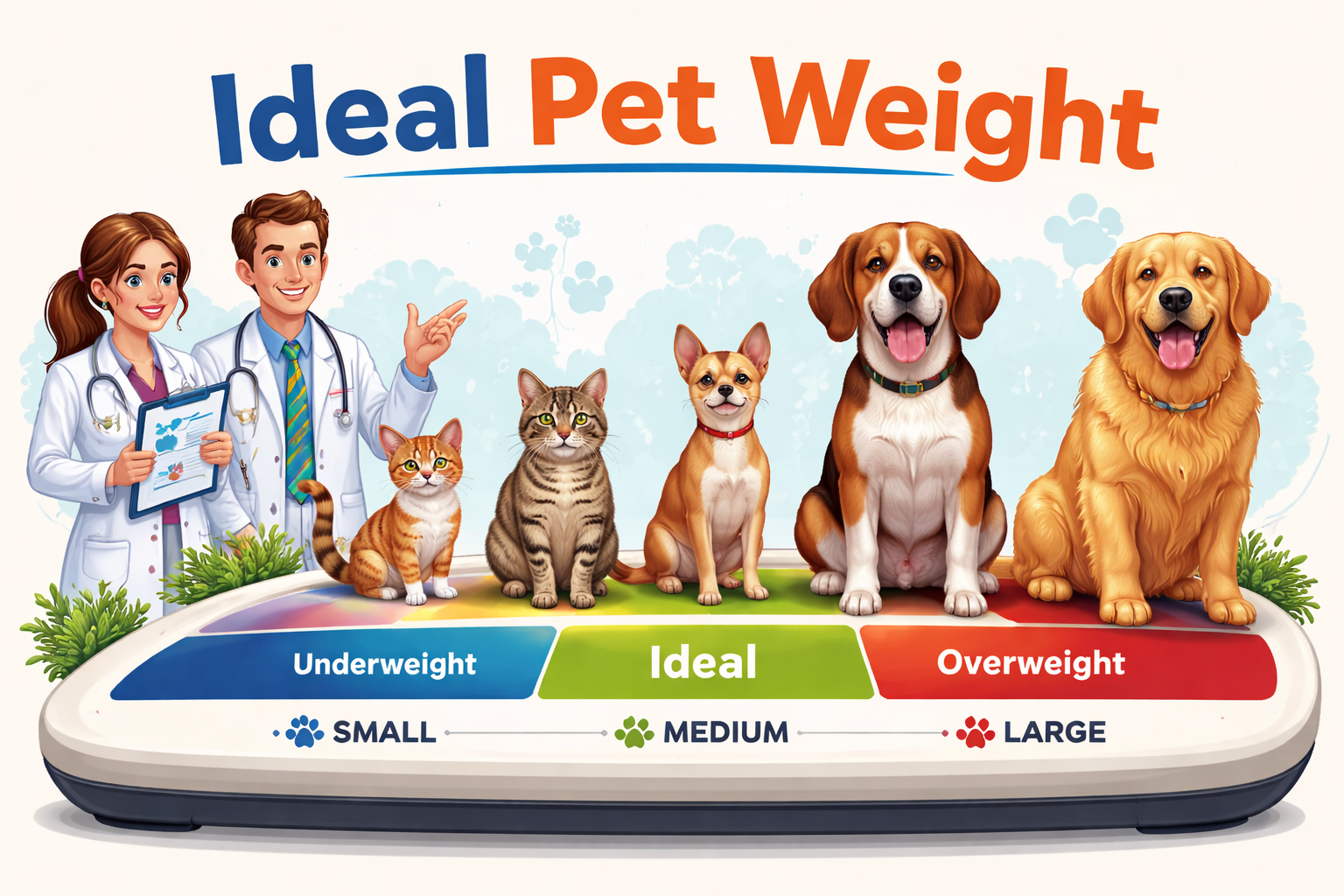
Many people want to know an exact amount their dog or cat should weigh. The question really should be, “What is the ideal body condition score (BCS) for my pet”.
What we are looking for is a BCS of 5 out of 9. When viewed from above, you should see an hour glass figure for our dogs a cats. Ideally, you should see their rib cage round out, a slight narrowing at their waist (or flanks) and then a mild curve out from their hips. You should easily feel their ribs when you run your hand over their sides. From the side view, you should see a tuck in their abdominal area and a slight curve in wards at their flanks.
There are times when we want our pets to be a little on the lighter side. This is especially true for pets that are suffering from orthopedic issues like arthritis. When this issue is a concern, the orthopedic specialists advise a BCS of 4 out of 9. This means that on a short coated dog, you can see the last few ribs and the abdomen is tucked up high. These animals should also be on a glucosamine & chondroitin supplement along with fish oil capsules called Snip Tips.
So if our four-footed kiddos have over shot their ideal BCS, there are many options that can be used to reduce their weight. Exercise is an important part of the weight loss equation, but it is only part of the answer. The real key is limiting the calories an animal eats. This may be accomplished by purchasing a weight reduction diet. Over the counter diets for weight loss are made for an animal that only needs to lose a small amount of weight. When an animal is grossly overweight (BCS 8/9 or 9/9) prescription weight loss diets for pets should be considered to get the pounds off in a reasonable amount of time (4 to 6 months). These prescription diets are formulated with herbs that help curb your pet’s appetite while at the same time loose the weight. Another option to lose weight for pets that have special dietary needs is to reduce the amount of kibble by 30% and replace it with high fiber vegetables like green beans, squash or zucchini. These veggies can be offered raw, steamed or boiled, but never fried! If you want to use canned veggies instead of fresh or frozen formulations, you will need to use canned veggies with no sodium because dogs cannot tolerate the high salt in canned foods. Many over weight cats will eat canned plain pumpkin as a replacement for a small portion of their daily food. The high fiber veggies help an animal feel full longer which suppresses their appetite for a longer time in between meals.
The weight loss process involves feeding meals and not leaving food out all day long. It also means using low calorie treats such as high fiber veggies. You may also place the total amount of kibble your pet should receive for the day in a small container. Feed a portion for breakfast, offer 1-2 kibbles as a treat throughout the day and whatever is left over in the container may be fed as dinner. A kibble in our minds doesn’t seem like much of a treat but based on how fast some of our chubby kiddos eat, any kibble is a treat!
When losing weight, it is important to record your pet’s starting weight and then monitor their weight loss journey about every 2 months. If they have not started to lose weight after 2 months, you may need to reduce the kibble portion a little more. If they are losing weight too fast, you may want to increase the kibble portion slightly to maintain a more gradual weight loss process.
In the end, weight loss for our four footed kiddos should not be a starvation process, but a steady decline to that target body condition score. In the long run, our dogs and cats will live longer and have a better quality life if they live in the zone of their ideal body condition score.
Our knowledgeable veterinarians at Town and Country Animal Hospital are able to provide appropriate diet recommendations and nutritional advice to help you succeed in helping your pet achieve their weight loss goals. If you are not sure if your dog or cat is overweight, or would like more guidance towards achieving your pet’s ideal body condition score, please call to schedule an appointment today.
You can also refer to https://www.hillspet.com/pet-care/resources/body-condition-score for further information on assessing your pet’s body condition score.
Many people want to know an exact amount their dog or cat should weigh. The question really should be, “What is the ideal body condition score (BCS) for my pet”.
What we are looking for is a BCS of 5 out of 9. When viewed from above, you should see an hour glass figure for our dogs a cats. Ideally, you should see their rib cage round out, a slight narrowing at their waist (or flanks) and then a mild curve out from their hips. You should easily feel their ribs when you run your hand over their sides. From the side view, you should see a tuck in their abdominal area and a slight curve in wards at their flanks.
There are times when we want our pets to be a little on the lighter side. This is especially true for pets that are suffering from orthopedic issues like arthritis. When this issue is a concern, the orthopedic specialists advise a BCS of 4 out of 9. This means that on a short coated dog, you can see the last few ribs and the abdomen is tucked up high. These animals should also be on a glucosamine & chondroitin supplement along with fish oil capsules called Snip Tips.
So if our four-footed kiddos have over shot their ideal BCS, there are many options that can be used to reduce their weight. Exercise is an important part of the weight loss equation, but it is only part of the answer. The real key is limiting the calories an animal eats. This may be accomplished by purchasing a weight reduction diet. Over the counter diets for weight loss are made for an animal that only needs to lose a small amount of weight. When an animal is grossly overweight (BCS 8/9 or 9/9) prescription weight loss diets for pets should be considered to get the pounds off in a reasonable amount of time (4 to 6 months). These prescription diets are formulated with herbs that help curb your pet’s appetite while at the same time loose the weight. Another option to lose weight for pets that have special dietary needs is to reduce the amount of kibble by 30% and replace it with high fiber vegetables like green beans, squash or zucchini. These veggies can be offered raw, steamed or boiled, but never fried! If you want to use canned veggies instead of fresh or frozen formulations, you will need to use canned veggies with no sodium because dogs cannot tolerate the high salt in canned foods. Many over weight cats will eat canned plain pumpkin as a replacement for a small portion of their daily food. The high fiber veggies help an animal feel full longer which suppresses their appetite for a longer time in between meals.
The weight loss process involves feeding meals and not leaving food out all day long. It also means using low calorie treats such as high fiber veggies. You may also place the total amount of kibble your pet should receive for the day in a small container. Feed a portion for breakfast, offer 1-2 kibbles as a treat throughout the day and whatever is left over in the container may be fed as dinner. A kibble in our minds doesn’t seem like much of a treat but based on how fast some of our chubby kiddos eat, any kibble is a treat!
When losing weight, it is important to record your pet’s starting weight and then monitor their weight loss journey about every 2 months. If they have not started to lose weight after 2 months, you may need to reduce the kibble portion a little more. If they are losing weight too fast, you may want to increase the kibble portion slightly to maintain a more gradual weight loss process.
In the end, weight loss for our four footed kiddos should not be a starvation process, but a steady decline to that target body condition score. In the long run, our dogs and cats will live longer and have a better quality life if they live in the zone of their ideal body condition score.
Our knowledgeable veterinarians at Town and Country Animal Hospital are able to provide appropriate diet recommendations and nutritional advice to help you succeed in helping your pet achieve their weight loss goals. If you are not sure if your dog or cat is overweight, or would like more guidance towards achieving your pet’s ideal body condition score, please call to schedule an appointment today.
You can also refer to https://www.hillspet.com/pet-care/resources/body-condition-score for further information on assessing your pet’s body condition score.